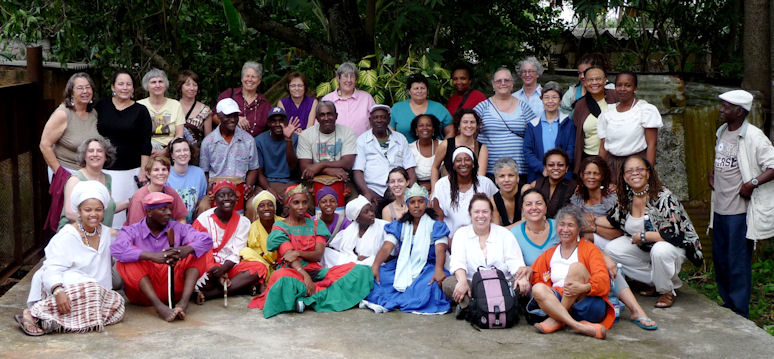
People
We had free access to people, went to people’s homes, talked to people on the street. Housing is owned like condos, the state owns the land the tenants own the building, so people do their own repairs, remodeling, and trade/sell their units. Because of the embargo, most items are in short supply so most housing is not in great shape, although it is functional. Most buildings need paint, etc. People are very proud of their basic system: free medical care, education, etc. Infant mortality rate is better than the US and life expectancy is almost doubled since 1959 (40s to 70s). Cuba educates teachers and medical professionals from all over the world free, including 500 students from the USA currently studying there. They have exported tens of thousands of both to Latin America and Africa. That said, no one likes living on 20 dollars a month. It is enough for the basics, but everyone wants more than the basics.
In Cuba, snack foods are beyond the basics: you don’t see chips, etc except in the tourist shops. And the prices in the tourist shops are American equivalent. So, these items are totally outside the budget of most Cubans, as are Internet service, cell phones and other electronic gadgets. We all had our digital cameras, etc, and took lots of pictures. People liked having their pictures taken and looking at them on the digital screens. Many items are still rationed to make sure that everyone gets some. People who work with tourists have access to tips so some teachers, etc are leaving their professions to work in the tourist industry. Hopefully, as the economy improves, this will be less appealing, as the standard of living for everyone is improved.
Art and Music
Artists and musicians get paid just like everyone else; as a result, the arts thrive in Cuba. Artists don’t have day jobs, being a dancer, drummer, etc is their job. They are paid similar wages, in the 20 dollar/month range. But they can pursue their art full time and being an artist is considered a viable profession. Cuba was colonized much like the US, by Spanish, French, British. (We stayed at a hotel on the beach at Baracoa, which is one of the first places Columbus landed; we did a cleansing ceremony on the beach and at the commemorative cross there).
But in Cuba, slaves were treated differently in one way: they were left in tribal and family groups. The result is that there are families in the provinces in Cuba that can trace their ancestry and culture to slave times and have maintained songs and dances for over 150 years. Cuba has political ties to Africa, but it also has strong cultural ties and there is a great deal of effort put into researching and preserving these traditions. Music and public art are everywhere and reminded me a lot of the public sculpture and murals in SF.