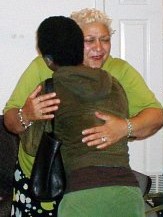
I was glad I made the trek from the East Bay to SF at the end of a long work-day. The ambiance was infused with broad smiles and mirth as sister writers reunited with one another and made new connections. Throughout the evening, I sensed mutual admiration and words of support wafting through the air as seasoned and aspiring writers engaged in lively conversations. I was especially thrilled to have the opportunity to speak at length with Dossie Easton, the co-author of Radical Ecstasy (Greenery Press). It’s a must read for kinkster-spiritualists. The gathering was in a supportive and I dare say it was a loving environment; the perfect setting for a reading and discussion with Jewelle and Cherry.
Jewelle Gomez is the consummate storyteller whether the stories are from her published work, rich oral herstory or recounting her experiences as a long-time activist. Upon my arrival, I quickly sat down at Jewelle’s feet so as to catch every syllable and word, as she was already mid-way through a passage from her manuscript. It had been a while since I heard Jewelle read fiction or poetry and I didn’t want to miss out on the thrill of a reading.

There is an unmistakable excitement and palatable anticipation when one has the opportunity to hear a writer read her unpublished work publicly for the first time. This was the case when Jewelle read from Televised. At the reading, I detected a collective quickening amongst the audience as Jewelle unwrapped her story like a fine piece of chocolate truffle, enticing us with tasty morsels of dialogue from the manuscript.
The following day Jewelle commented on her experience at the event:
That was a fun evening for me especially because I love Cherry’s work so much and have been eagerly anticipating a new book from her.
It was also monumental for me because it’s the first time I’ve read from the new novel. I don’t have a publisher yet but have my fingers crossed since I’ve been editing it for the past couple of years.
It is entitled Televised and the story is about former Black student activists from the 1960s attending their 30th anniversary reunion. The two main characters Roxie and her former best friend Sheila, who’s since come out as a lesbian, have to find a way to reconnect and the group of former radicals has to find a way to reconnect to activism.
I don’t know if you heard me describe my reasons for having the primary character not be a lesbian—essentially in writing a story that might be critical of Black Nationalist ideology or practice I didn’t want that to come from a lesbian character because it could so easily be dismissed by non-lesbian readers. And I wanted to be true to the experience of that period—most of us were not out working in the movement.
You can read more of her observations on Cherry’s work and their involvement in the world of lesbian literature at Jewelle’s blog.